
Design Diary 1. Return of the Ripper
Part 1 of 8. Read part 2.
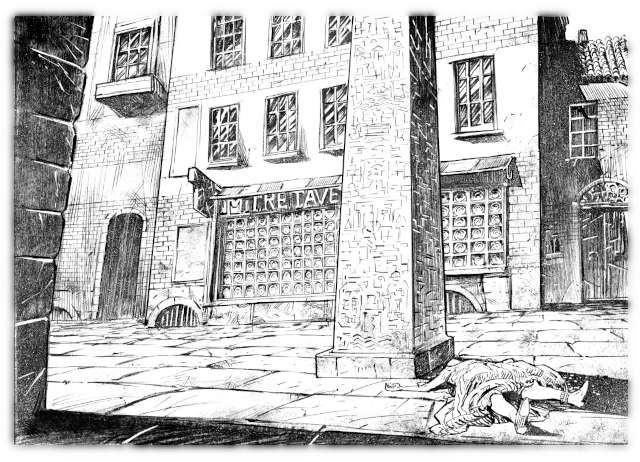
My interest in the mythology of Jack the Ripper began when I was an undergraduate in London in the 1990s. The student haunt of Brick Lane was popular for its legendary curry houses. A few steps away, on the corner of Fournier Street and Commercial Street, in the shadow of the strange, looming, obelisk-shaped steeple of Christ Church Spitalfields, stood the Ten Bells Public House.
Built in the 18th century, the Ten Bells had long been linked to the Whitechapel murders. In 1976, the pub had been renamed to The Jack the Ripper, with memorabilia relating to the murders on display in the bar. The women’s rights organisation Reclaim the Night protested that this was glorifying violence against women and campaigned for name to be changed back. The name The Ten Bells was restored in 1988, one hundred years after the Autumn of Terror.
During the autumn of 1888, the serial killer known as Jack the Ripper killed and mutilated five victims: Mary Ann Nichols, Annie Chapman, Elizabeth Stride, Catherine Eddowes and Mary Jane Kelly. The case attracted an extraordinary level of public attention, partly because of the horrific nature of the murders, but also because of lurid coverage by the press. The Whitechapel murders can be said to be the beginning of tabloid journalism. One hundred and thirty-seven years later, the case has lost none of its fascination, in part because the killer has never been identified.
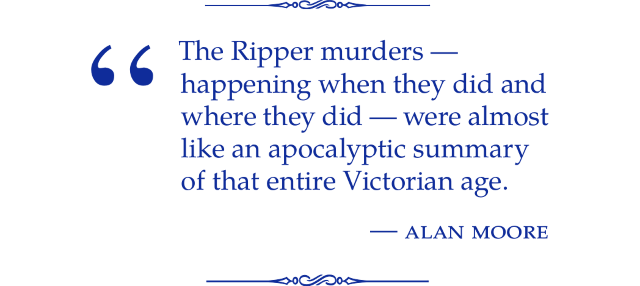
In 1999, my curiosity about Ripper lore drew me to Alan Moore’s meticulously-researched comic book, From Hell. Moore’s thesis is that you can’t understand the 20th century without understanding the Victorians — and you can’t understand the Victorians without understanding Jack the Ripper. From Hell tells the story of the Whitechapel murders, overlaid with social analysis, psychogeography, conspiracy theories and the occult.
My first experience of a role-playing scenario based on the Jack the Ripper myth was Andrew Hind’s Legend of the Ripper, published in 2006. This horror-themed adventure references locations linked to the Ripper case — Miller’s Court, the Ten Bells — centering around the urban legend that the ghost of Mary Kelly continued to roam the streets of Whitechapel for years after her death. The urban decay setting and horror elements set this adventure apart from other dungeon crawls of its era.
Twenty years later — now playing DCC RPG — I picked Legend off my bookshelf again. It’s a tight dungeon crawl that does not concern itself with the details of the Ripper investigation. I wanted to return to Miller’s Court and the Ten Bells, but with the scope widened to include the hunt for the killer.
Ergo, I imagined a fantasy version of 1880s Whitechapel — the District of Spittle-Fields — its built environment, its populace and the sinister cult behind the new Autumn of Terror. The result is Return of the Ripper, a 20th-anniversary homage to Legend of the Ripper, remastered and expanded.
This post is an excerpt from Return of the Ripper Appendix N: Inspirational Sources.
Part 1 of 8. Read part 2.